When it comes to fertility, making small, intentional lifestyle changes can have a big impact on your overall reproductive health. Whether you’re just starting your fertility journey or looking for ways to improve your chances of conception, focusing on positive changes can help set you up for success.
A healthier lifestyle doesn’t just boost your energy and mood—it can can also:
- Get that egg/sperm quality from a 6 to a 10
- Get your (mom-to-be) body into the most baby-ready state possible
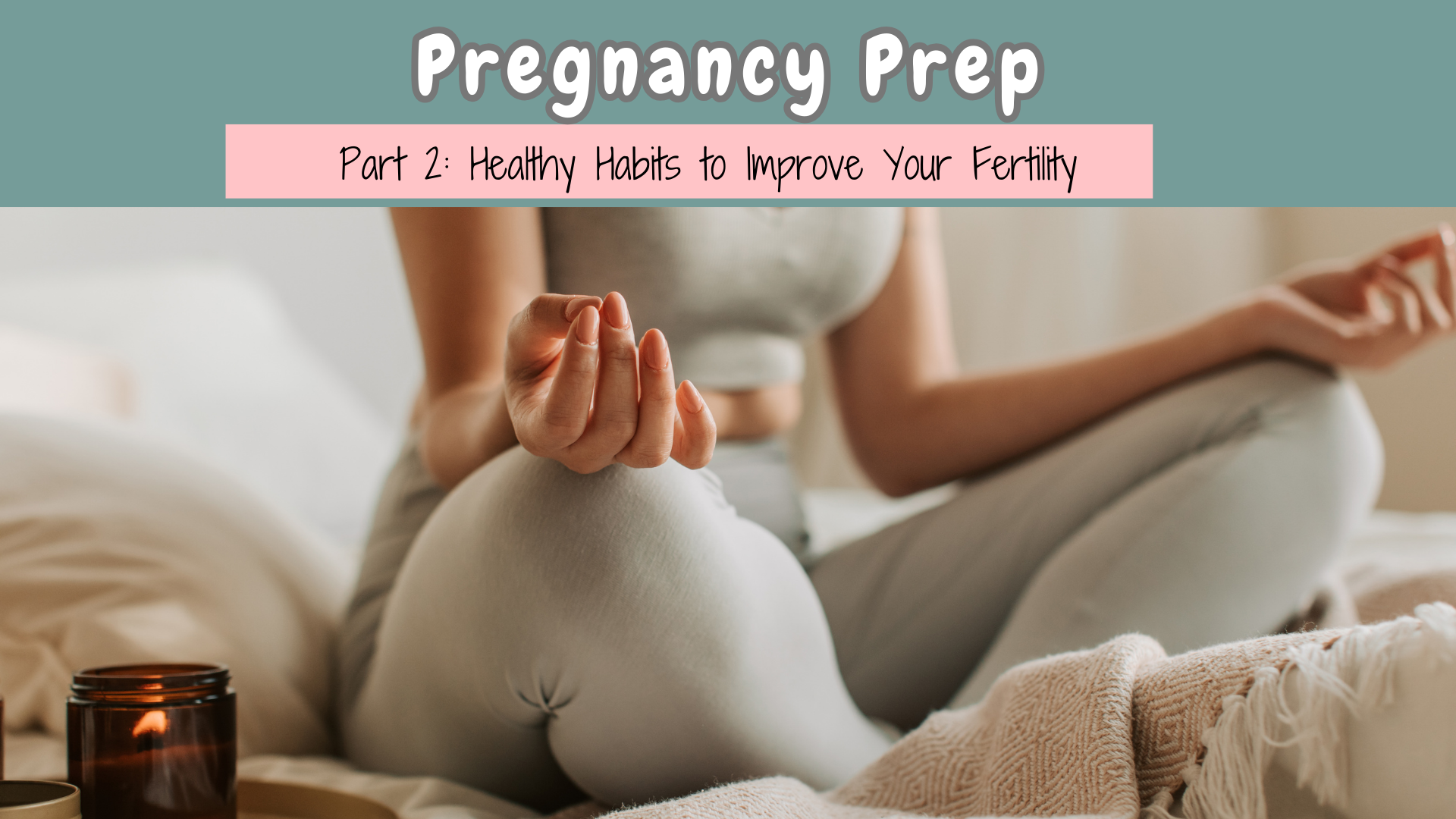
In this part 2 of the prepping for pregnancy series, I am going to discuss 6 healthy habits to adopt and implement into your every-day life during the preconception phase (Pssst, if you want to recap what the preconception phase is and why it is important, you can read about it here) to move the needle in the right direction to get – and stay – pregnant.
Let’s dive in…
Habit #1: Eat fertility-supporting foods
Eating right during the preconception phase is super important for getting your body ready for pregnancy, boosting egg and sperm quality, and supporting your overall reproductive health. Nutrients like folate and choline are especially important in the early stages of pregnancy—sometimes even before a woman knows she is pregnant—since they help prevent things like neural tube defects. Starting a balanced, nutrient-packed diet ahead of time makes sure your body has everything it needs right from the start of your pregnancy. When making dietary changes, try to include the following:
- Whole Foods: Ditch the processed junk and opt for fruits, veggies, lean proteins, and whole grains.
- High-Quality Protein: Research has shown that women who ate around 80-120g of protein daily, had improved pregnancy outcomes.
- Healthy Fats: Include sources like avocado, nuts, seeds, and olive oil to keep your hormones in check.
- Carbs: they are not the enemy if you eat the right type of carbs. You want to eat complex carbs that have a low glycaemic index and are as close to their natural form as possible – in other words, skip the simple, refined carbs but enjoy the rest.
Habit #2: Bridge the gap with supplements
Taking supplements before trying to conceive is a smart way to fill in the gaps between what we eat and what our bodies need to support a healthy pregnancy. Supplements give us a boost of key nutrients like folate, choline, and omega-3s, which can be tough to get enough of through food alone. Plus, there are certain nutrients our bodies just can’t make on their own, so supplements help make sure we’re covered. Antioxidants in supplements also help protect eggs and sperm by reducing oxidative stress and inflammation, which is super important for fertility. Here are some must-have supplements to consider during the preconception phase:
- Folate: Vital for preventing neural tube defects in your baby. Aim for 400-800 mcg daily.
- Iron: Supports red blood cell production and oxygen transport to your reproductive organs.
- Vitamin D: Helps regulate hormones and supports immune function (needs Calcium and K2 for absorption)
- Omega-3 Fatty Acids: Crucial for brain development and reducing inflammation.
- Vitamin C: Supports collagen production, hormone balance, and overall fertility.
- Coenzyme Q10 (CoQ10): Improves egg and sperm quality by boosting mitochondrial function.
- N-Acetyl Cysteine (NAC): Supports detoxification and boosts antioxidant levels.
Habit #3: Move your body
Getting regular exercise during the preconception phase is a game-changer because it helps boost blood flow, which means more oxygen, nutrients, and hormones get to your reproductive organs—great for enhancing fertility. Moving your body also supports natural detox pathways, helping to clear out any toxins that could mess with conception. On top of that, exercise lifts your mood, reduces stress, balances blood sugar, and helps manage a healthy weight—all key things for getting your body ready for pregnancy. Here’s what to aim for:
- 30 Minutes of moderate exercise daily: Include exercises like brisk walking, yoga, hiking or swimming
- Mixing in some strength training with light weights or resistance bands to build muscle and support overall health.
Habit #4: Prioritize Sleep
Good quality sleep is essential during the preconception period, as it supports the body’s recovery and repair processes, ensuring your reproductive system is functioning optimally. Sleep affects melatonin release, a powerful antioxidant that protects and enhances egg quality. Adequate rest also plays a crucial role in managing stress and maintaining hormonal balance, both of which are vital for fertility and preparing the body for pregnancy. Aim for:
- 7 – 9 Hours of good quality sleep
- A bedtime no later than 11pm (the earlier, the better)
Habit #5: Do things that promote joy, creativity and relaxation
Tapping into creative activities that bring you joy and help you relax during the preconception phase can be an amazing way to channel your creative energy and sync it with the energy of conception—the ultimate creation! By nurturing your creative side, you’re opening yourself up to more balance and positive vibes, which can make a real difference in your fertility journey. Plus, expressing yourself creatively is a great way to de-stress, relax, and get into a good mental and emotional flow. Whether it’s art, music, dance, or anything that gets your imagination going, it all helps raise your vibrations. Some fun things to try include:
- Gardening
- Cooking/baking
- Scrapbooking/journaling
- Sewing/knitting/crocheting
- Soap/candle making/crafting
- Decorating/redecorating your house/office/bedroom
- Reorganising your wardrobe, pantry, desk, etc
6. Try out fertility nurturing complementary therapies
Incorporating complementary therapies into your preconception care routine can significantly enhance your fertility. These practices increase blood flow to the reproductive organs, promote hormonal balance, reduce stress, and lower inflammation, all of which are crucial for optimizing conception and supporting a healthy pregnancy.
By integrating these holistic therapies, you create a nurturing environment within your body that fosters overall reproductive health. Examples of these therapies include:
- Acupuncture
- Womb massage
- Low lever laser therapy
- Electrotherapy, and
- Castor oil packs.
While some of these therapies need to be carried out by a licensed practitioner, many others you can DIY in the comfort of your own home.
So there you have it – 6 fertility enhancing habits to adopt in your preconception care plan which can make a profound difference in nurturing and improving your fertility.
Remember, small changes can yield significant results over time.
Part 3 of our Preconception Preparation series covers fertility-damaging habits that may hinder your fertility, as well as practical steps to overcome them. You can check out that blog post here
If you found this post helpful, share it with friends who might benefit, and join our community for more fertility-focused content and support.